 Wonderful Peace
I Heard the Bells on Christmas Day
Hear this hymn on the organ or piano in the Wonderful Peace app.
- I heard the bells on Christmas Day Their old, familiar carols play, And wild and sweet the words repeat Of peace on earth, good will to men!
- And thought how, as the day had come, The belfries of all Christendom Had rolled along th’ unbroken song Of peace on earth, good will to men!
- Till ringing, singing on its way, The world revolved from night to day, A voice, a chime, a chant sublime, Of peace on earth, good will to men!
- And in despair I bowed my head: “There is no peace on earth,” I said, “For hate is strong, and mocks the song Of peace on earth, good will to men!”
- Then pealed the bells more loud and deep: “God is not dead, nor doth He sleep; The wrong shall fail, the right prevail, With peace on earth, good will to men!”
Words as printed in old hymnals, free for anyone to sing and share.
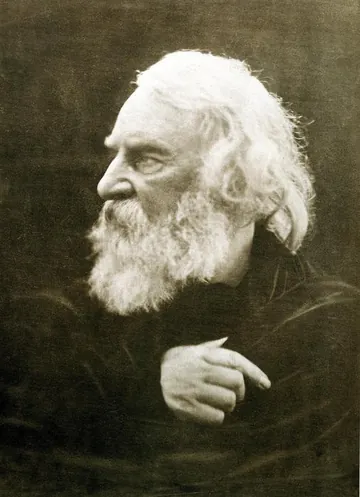
Photograph by Julia Margaret Cameron, 1868
The story behind the hymn
Henry Wadsworth Longfellow was one of America’s most beloved poets. In July of 1861 his wife Fanny died after an accident with fire at their home. That first Christmas, he wrote in his journal, “How inexpressibly sad are all holidays.”
The Civil War had begun that same year. In 1863 his oldest son, Charley, ran away to join the Union Army. That November, Charley was badly wounded, and his father traveled to Washington to bring him home to recover.
Most likely at Christmas of 1864, with the war still going on, Longfellow wrote a poem he called “Christmas Bells.” In it he hears the bells ringing out “peace on earth, good will to men,” and at first he cannot believe it, for hate seems so strong in the world.
But the poem does not end in despair. The bells ring on, louder and deeper: “God is not dead, nor doth He sleep. The wrong shall fail, the right prevail.” Some years later the poem was set to music, and it became the carol we sing today.