 Wonderful Peace
O for a Thousand Tongues to Sing
Hear this hymn on the organ or piano in the Wonderful Peace app.
- O for a thousand tongues to sing My great Redeemer’s praise, The glories of my God and King, The triumphs of His grace!
- My gracious Master and my God, Assist me to proclaim, To spread through all the earth abroad The honors of Thy name.
- Jesus! the name that charms our fears, That bids our sorrows cease; ’Tis music in the sinner’s ears, ’Tis life, and health, and peace.
- He breaks the power of canceled sin, He sets the prisoner free; His blood can make the foulest clean, His blood availed for me.
Words as printed in old hymnals, free for anyone to sing and share. Checked word for word against an old printed hymnal: Coronation Hymns 1910 No. 284.
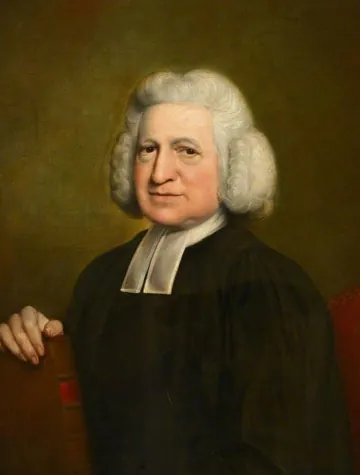
Portrait by John Russell, 1771
The story behind the hymn
Charles Wesley was a minister of the Church of England, and so was his brother John. For years both men worked hard to please God, yet neither felt at peace.
In May of 1738, Charles lay ill in London. On Whitsunday, the twenty-first of May, he came to a quiet, deep trust that his sins were forgiven. Just three days later his brother John felt his own heart “strangely warmed.”
One of the men who had helped them was Peter Böhler, a young Moravian minister from Germany. He is remembered as saying, “Had I a thousand tongues, I would praise Him with them all.”
A year later, to mark the first anniversary of that day, Charles wrote a long hymn titled “For the Anniversary Day of One’s Conversion.” It began, “Glory to God, and praise and love,” and one of its verses opened, “O for a thousand tongues to sing.” Those words became the start of the hymn as we know it. When John Wesley put together a hymnbook for the Methodists in 1780, he placed this hymn first. It is a song of thanks from a man who never forgot the day grace found him.